
Journal
Microplastics in Rinse-Off Products: The EU's 2027 Deadline, Explained
Shampoo, shower gel and other rinse-off products have until 16 October 2027 to drop intentionally added microplastics in the EU. What the rule covers, how it compares with Thailand's microbead ban, and what it leaves open.
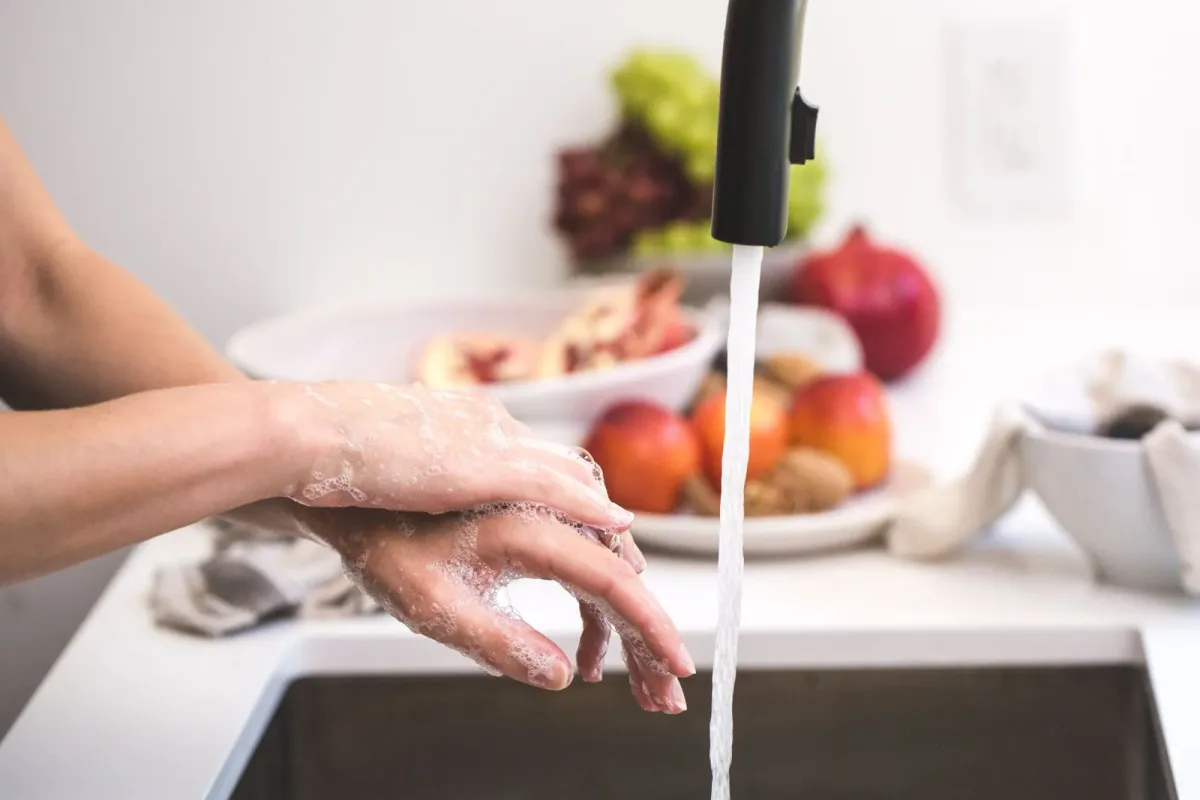
Since 17 October 2023, the European Union has been phasing out synthetic polymer microparticles, better known as microplastics, that are added to products on purpose.[1] For anyone who washes with shampoo or shower gel, the date that matters most is a year away: the transitional period for rinse-off cosmetics ends on 16 October 2027.[1]
What counts as a microplastic
The rule is Commission Regulation (EU) 2023/2055, an amendment to the EU's chemicals law, REACH. It restricts synthetic polymer microparticles on their own or intentionally added to mixtures; finished articles are outside its scope.[1]
The definition is technical. A synthetic polymer microparticle is a solid polymer contained in particles, or forming a continuous coating on them, where at least 1 per cent of the particles measure 5 mm or less in every dimension, or, for fibre-like particles, are 15 mm or less long with a length more than three times their diameter.[2]
Some materials are explicitly out. Glitter that is biodegradable, soluble, natural or inorganic is not considered a microplastic, and the Commission's guidance treats loose plastic glitter as a mixture in its own right.[1]
The timetable for cosmetics
The restriction applies in stages, depending on how a product is used:[1][2]
- Exfoliating microbeads and loose plastic glitter: banned from 17 October 2023.
- Rinse-off products, such as shampoo, conditioner and shower gel: allowed until 16 October 2027.
- Leave-on products: allowed until 16 October 2029, which is also the end date for microplastics used to encapsulate fragrance.
- Make-up, lip and nail products: allowed until 16 October 2035. From 17 October 2031 they must carry a label stating that they contain microplastics.
Products placed on the EU market before 17 October 2023 did not have to be recalled.[1] Suppliers must also give instructions for use and disposal intended to stop the particles reaching the environment.[2]
Thailand moved earlier on microbeads
Thailand banned one part of the problem years before the EU's deadlines. In December 2019, the Ministry of Public Health published a notice in the Royal Gazette banning the import, production and sale of cosmetics containing plastic microbeads, the tiny scrubbing beads once common in face washes, from 1 January 2020.[3] Products already on sale could stay on the shelves until 28 June 2020.[4]
The ministry's reasoning was the same as Europe's: the beads do not break down in water or the environment, and once washed down the drain they can slip through wastewater treatment and end up in the sea.[3]
The EU rule is broader. It is not limited to scrubbing beads but covers synthetic polymer microparticles added for other purposes too, which is why its deadlines stretch to 2035.[1][2]
What is still unanswered
The EU restriction governs what is sold in the EU; Thailand's rule covers microbeads in cosmetics. For most products the ingredient list will not say in plain words whether a formula contains microplastics, and the EU's labelling duty for make-up, lip and nail products only starts in 2031.[1] Until then the most reliable answer comes from the brand, so it is worth asking directly whether a formula contains synthetic polymer microparticles as the EU defines them.
Rinse-off products are also only one route. What goes down the drain matters because of where it ends up, which is why the same debate runs through the global plastics treaty talks and the fate of Thailand's coral reefs.
Disclosure: Plus Minus Lab, which publishes this site, makes rinse-off body care, including the SCENTS and −2°C Rosemary & Mint ranges. This article explains the rules; it is not a statement about any product. Questions about our formulas are welcome through our contact page, and more reporting is in the Journal.
References
- European Commission, "Commission Regulation (EU) 2023/2055: Restriction of microplastics intentionally added to products", Internal Market, Industry, Entrepreneurship and SMEs.
- "New EU restrictions on microplastics in cosmetic products", coslaw.eu, 24 October 2023.
- "Thailand bans plastic microbeads in beauty products", VNA / Vietnam+, 25 December 2019.
- Winnie Xu, "Thailand Officially Enforced the Cosmetic Microbeads Ban", ChemLinked, 30 October 2020.
Cover photo: Burst / Pexels. Links checked on 15 October 2026.